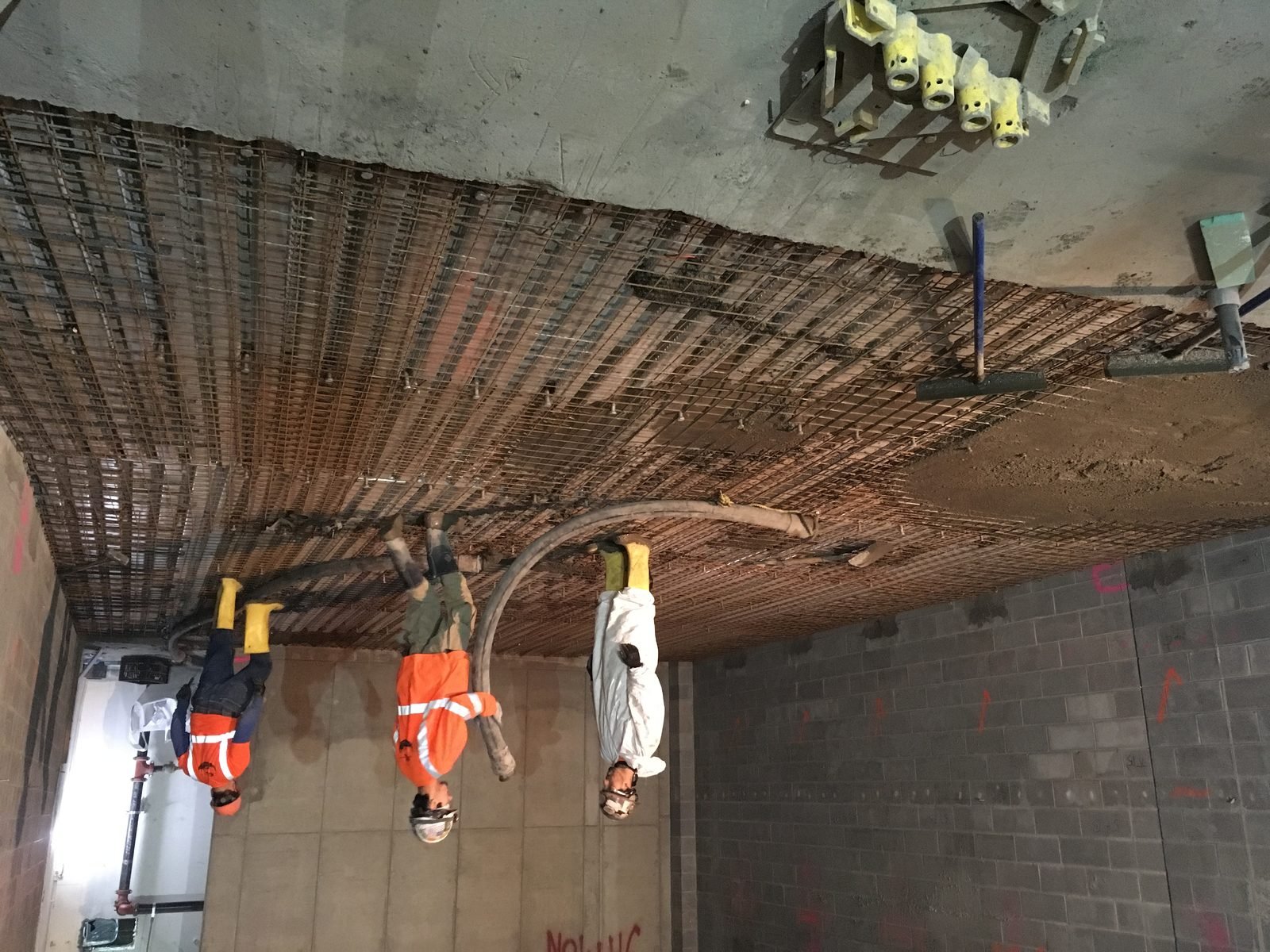
Ordering too little concrete mid-pour is a genuine problem — a cold joint between two separately poured batches weakens the slab. Ordering the right amount up front, with a sensible buffer, avoids that entirely.
The Basic Volume Formula
Concrete volume is simply length × width × thickness, converted to cubic yards or cubic meters depending on how it's sold locally. The tricky part isn't the formula — it's making sure every measurement is in consistent units before multiplying.
Slabs vs Footings vs Columns
- Slabs: length × width × thickness — straightforward rectangular volume
- Footings: often a trench shape — width × depth × length of the trench run
- Columns: circular cross-section volume (π × radius² × height) rather than rectangular
Why Ordering a Buffer Matters
Bagged vs Ready-Mix
Small projects (a few square feet) are often more economical with bagged concrete mixed on-site; larger pours (most slabs, driveways) are typically ordered as ready-mix delivered by truck, priced by the cubic yard — knowing your total volume up front is what a ready-mix supplier will ask for.
Worked Example: A Patio Slab
You're pouring a patio 4 m long, 3 m wide and 100 mm (0.1 m) thick:
- Volume: 4 × 3 × 0.1 = 1.2 m³.
- Add a 10% buffer: 1.2 × 1.10 = 1.32 m³. Order about 1.35 m³ of ready-mix.
The same patio in imperial units — 13 ft × 10 ft × 4 in: convert the thickness to feet first (4 ÷ 12 = 0.333 ft), then 13 × 10 × 0.333 = 43.3 ft³. There are 27 cubic feet in a cubic yard, so 43.3 ÷ 27 = 1.6 yd³, or about 1.75 yd³ with a buffer.
How Many Bags Is That?
For small jobs, it helps to know roughly how much one bag makes. As a common guide, a 40 kg bag of pre-mixed concrete yields about 0.017–0.018 m³, so one cubic meter needs around 55–60 bags. In US sizes, an 80 lb bag yields about 0.6 ft³, so one cubic yard needs about 45 bags. Always check the yield printed on the bag you buy, as it varies by brand.
Common Mistakes to Avoid
- Mixing units — for example, multiplying meters by millimeters or feet by inches. Convert everything to one unit first.
- Measuring thickness at one spot only. Check depth in several places; a low corner can add a lot of volume.
- Forgetting extra areas such as thickened slab edges, steps or post holes.
- Ordering no buffer. Running short mid-pour causes a weak cold joint; a small surplus is cheap insurance.
Frequently Asked Questions
How thick should a concrete slab be?
Typical guides are around 100 mm (4 in) for patios and walkways and 100–150 mm (4–6 in) for driveways that carry cars. Local building codes and your engineer's specifications take priority.
How long before I can walk or drive on new concrete?
Light foot traffic is usually fine after about 24–48 hours, and cars after about 7 days. Concrete keeps gaining strength for around 28 days.
See it with your own figures
Use our free Concrete Calculator — slabs, footings, columns, and steps
Open Concrete Calculator →